The Blueprint to an 80% Gem Rate: Part 1
Dean Seidman
Grading isn't a gamble when you build in a floor. Part 1 of our new grading series breaks down the Slabbing Decision Formula, the 3x raw value benchmark and the PSA 9 safety net that will have you breaking even at worst.

To Grade or Not to Grade
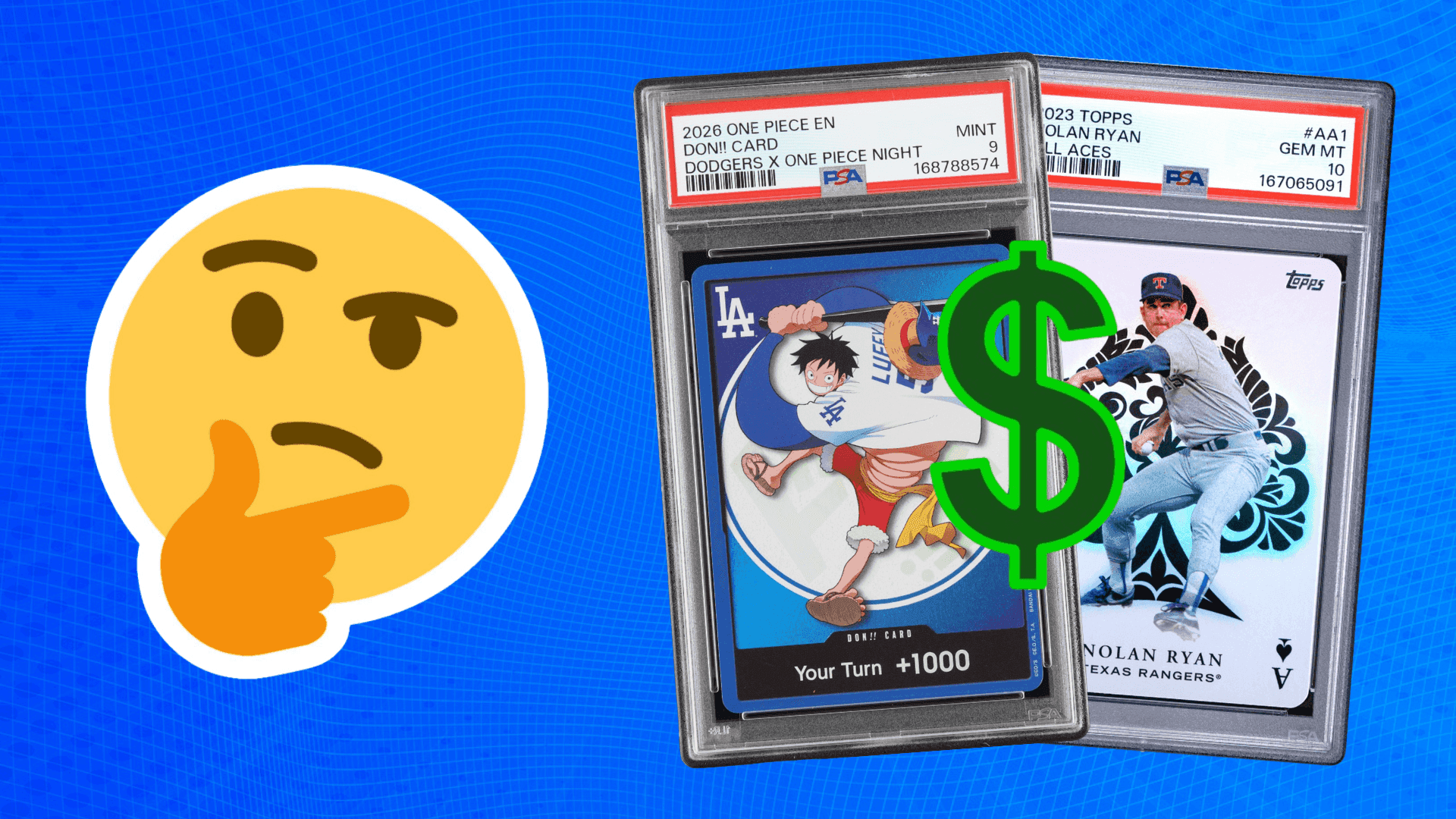
They say beauty is in the eye of the beholder, but in the eyes of the grader, eye contact won't save off-centering, a fuzzy white corner, or a surface scratch. Certain defects immediately disqualify your chance to gem, and no amount of wishful thinking will change that.
**That’s why we’re launching To Grade or Not to Grade: The Blueprint to an 80% Gem Rate: a three-part series breaking down how grading experts turn raw inventory into high-margin slabs. **While some cards are "grade-always" locks that set the market on fresh drops, most single cards are case-by-case and for good reason. With turnaround times tying up capital, a calculated workflow is the only way to protect your margins.
Part 1 kicks things off with the core question:
_Does the raw market value justify the financial risk?
_
Setting a minimum raw cost and checking pop counts beforehand ensures you break even at the very least if a card falls short. The highest profit per card actually came from submissions where raw value absorbed the downside.
In other words: hitting an 80% Gem Mint rate isn't just about spotting surface scratches, fuzzy white corners, or centering issues — it's about building a data-driven workflow that adds real dollars to your display table.
**The Slabbing Decision Formula
**Before submitting any raw card, run it through this core formula to establish your Expected Value (EV):
Expected Profit = (Gem Rate % × PSA 10 Value) + (Non-Gem % × PSA 9 Value) - Raw Card Value - Total Landed Fees
**General Rules of Thumb to Protect Your Profits
**The PSA 10 Benchmark (3x Raw Value): To justify the risk and turnaround time, a card’s target PSA 10 market value should be at least 3x its raw card value. This 3x multiplier ensures you generate enough margin to easily cover grading fees ($25–$30+ bulk) and lock in solid net profit.
The PSA 9 Break-Even Safety Net: A submission only makes sense if the raw card value absorbs the downside. Your expected PSA 9 market price must cover Raw Card Value + Total Fees so you break even at worst if you miss the gem grade. If a PSA 9 results in a net loss, the margin for error disappears.
Backlog & Capital Risk: Turnaround queues tie up inventory and cash flow for 90–120+ days. If a raw card's hype or market price is prone to dropping over a 3–4 month window, selling raw today is the safer move to lock in immediate profit rather than risking market depreciation.
The takeaway from Part 1 is simple: grading isn't a gamble when you treat it like an investment with a floor. Run the formula, respect the 3x benchmark, and let the PSA 9 safety net do the worrying for you.