What Should I List This Card For?
Cass Sapir
We analyzed millions of raw card listings to answer the question every dealer asks: **“What should I list this card for?”** The answer is not just “match the market price.” This series introduces the Raw Card Pricing Playbook: practical, data-backed guidance to help dealers stop guessing and start pricing with intent.

What Should I List This Card For?
Every dealer has asked the same question.
You scan a card. CDP identifies it. A market price appears.
Now what?
Do you list it at market? Round up? Round down? Price it at $1.99? $2.00? $2.49? $2.99? Do you try to move it fast, or do you squeeze a little more value out of it?
That question seems simple:
What should I list this card for?
But the answer is not simple — especially for low-end raw cards.
That is why we are building the Raw Card Pricing Playbook.
The Card We Will Follow
Throughout this series, we are going to use one card as our example:
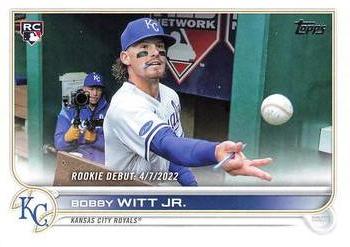
2022 Topps Update Bobby Witt Jr. Rookie Debut #US187 — raw, ungraded
It is a perfect teaching card.
It is not worthless. It is not high-end. It is not ultra-rare. It is a recognizable rookie-year card of a well-known modern player, but it still lives in the low-dollar raw-card world where pricing decisions are not obvious.
That is exactly the kind of card dealers handle every day.
Imagine CDP shows a raw market price of $1.87. What should the dealer actually do?
List it at $1.50?
List it at $1.87?
List it at $1.99?
List it at $2.99?
Bundle it?
Hold it?
Price it higher because Bobby Witt Jr. is a desirable player?
Price it lower because the card is common?
That one card lets us explore the entire pricing problem.
Market Price Is the Anchor, Not the Answer
The biggest mistake dealers can make is treating market price as a command.
If the market price is $1.87, that does not automatically mean the best listing price is $1.87.
In fact, our research suggests the opposite.
For low-end raw cards, pricing exactly to the penny often performs worse than using clean, familiar prices. And for cards under $5, listing economics matter as much as market value. A card with a $0.75 market price may need to be listed at $1.99 just to be worth picking, packing, and shipping.
Market price matters. But it is only the starting point.
The better question is:
Given this card’s value, demand, supply, player, set, and selling goal, what is the smartest sale price?
What We Learned From the Data
We analyzed millions of raw, ungraded cards listed through Card Dealer Pro.
To keep the analysis clean, we focused on cards that were actually listed, had real sale prices, had reliable raw market prices, and had enough time to sell.
The headline finding was clear:
Discounting helps cards sell faster, but the best revenue result does not come from racing to the bottom.
Across the full dataset, cards priced under 50% of market had the highest sell-through. But the strongest revenue-per-listed-card result came from cards priced modestly above market.
That is the key pricing tension:
Speed and revenue are not the same thing.
Dealers need to decide what they are optimizing for.
Sometimes the right answer is a fast sale.
Sometimes the right answer is a higher price.
Sometimes the right answer is not to list the card individually at all.
The Five Dimensions of Smarter Pricing
This series will break raw-card pricing into five dimensions.
Each article will use the Bobby Witt Jr. Rookie Debut card as the thread, then compare it to similar cards with different properties.
1. Price vs. Market Value
First, we will answer the core question:
Should this card be priced below market, at market, or above market?
For a raw Bobby Witt Jr. Rookie Debut card, the answer depends on the dealer’s goal.
If the goal is speed, price below market.
If the goal is balanced performance, price around market or slightly above.
If the card is clean, desirable, or moving with player momentum, a modest premium may make sense.
This article will explain how pricing below market affects sell-through, how pricing above market affects revenue, and when each strategy makes sense.
2. Market Value Tier
Next, we will show why card value changes the pricing logic.
A $0.75 card should not be priced the same way as a $7 card.
A $7 card should not be priced the same way as a $75 card.
For raw cards, the most important tiers are:
Under $1
$1 to $5
$5 to $20
$20 to $100
$100+
Our Bobby Witt Jr. card lives in the low-dollar tier, where the biggest lesson is this:
Low-end cards need price floors, not literal market matching.
A dealer may be better off listing a $2 market card at $2.99 or $3.99 than trying to match every comp to the penny.
3. Price Type / Price Ending
Then we will look at how the price looks to the buyer.
Should the dealer list the Bobby Witt Jr. card at:
$1.50
$1.87
$1.99
$2.00
$2.29
$2.49
$2.99
Our price-type research found a strong pattern:
Clean, familiar prices perform better than weird prices.
Whole-dollar prices performed very well overall. .99 pricing was widely used and performed well at scale. .95 pricing showed promise on stronger cards.
But random penny prices and odd 9-ending prices underperformed.
The lesson for dealers:
Do not over-optimize to the penny. Price clearly.
4. Liquidity: Supply vs. Demand
After that, we will add the next layer: liquidity.
Two cards can both have a $2 market price but deserve very different listing prices.
One might have hundreds of copies available and only a few recent sales.
Another might have limited supply and steady buyer demand.
Those cards should not be priced the same way.
For the Bobby Witt Jr. card, we will look at:
How many copies are currently for sale
How many have sold recently
Whether demand is rising or fading
Whether supply is heavy or thin
The pricing rule becomes:
High demand and low supply can justify a higher price. Weak demand and heavy supply require a more aggressive price.
5. Card Context
Finally, we will layer in card-specific context.
This is where pricing gets smarter than a formula.
The Bobby Witt Jr. card is a rookie-year card of a known player. That matters. But it is also a common base Rookie Debut card. That matters too.
A dealer should price it differently than:
A no-name veteran base card
A more desirable Bobby Witt Jr. flagship rookie
A Topps Chrome version
A numbered parallel
A card from a newly released set
A short print
A card tied to a hot player or recent performance spike
The final pricing model needs to understand not just market price, but the card itself.
The Goal: Simple Rules Dealers Can Use
This series is not about making pricing more complicated.
It is about making pricing more intelligent.
For now, we will explain the logic in plain English.
Over time, this same intelligence will become product guidance, AI recommendations, and automated pricing workflows inside CDP.
The Big Idea
The best dealers do not blindly match market.
They price with intent.
They know when to use a floor.
They know when to price below market.
They know when to price above market.
They know when a clean price ending matters.
They know when liquidity changes the answer.
And they know when the card itself deserves special treatment.
That is the edge we want to give every CDP dealer.
So let’s start with one card:
2022 Topps Update Bobby Witt Jr. Rookie Debut #US187.
The market gives us the anchor.
The playbook tells us what to do next.